Kolkata, February 27, 2026: The Indian Chamber of Commerce (ICC), through its National Expert Committee on Higher Education & Training, successfully hosted the 7th Global Education Forum (GEF) Programme today. The flagship conference convened eminent policymakers, academicians, industry leaders and international representatives to deliberate on a comprehensive roadmap for Viksit Bharat @2047 through future-ready educational institutions.
The summit, themed “Re-imagining Higher Education for Viksit Bharat @2047: Transforming Governance, Curriculum & Talent for a Global Knowledge Era,” centred on governance reform, curriculum innovation, translational research, digital transformation, industry-academia collaboration and global integration.
Union Minister of State for Education & Development of North Eastern Region, Government of India, Dr. Sukanta Majumdar, outlined the Centre’s strategic roadmap for transforming higher education under the vision of Viksit Bharat @2047. Emphasising structural reforms, he asserted that “any serious conversation about transforming Indian higher education must begin with the National Education Policy 2020,” describing it as “the most comprehensive reimagination of our education system in over three decades.”
He noted that the policy dismantled rigid disciplinary barriers, enabled multidisciplinary learning, introduced multiple entry and exit provisions, and institutionalised flexibility through the Academic Bank of Credits. Stressing its broader purpose, he said it is “about holistic development — nurturing critical thinking, creativity, ethical grounding and the capacity to contribute meaningfully to society.”
Referring to the Viksit Bharat Shiksha Adhishtan Bill, 2025, he described it as “a new architecture for governance,” marking a decisive shift “from inspection to trust, from suspicion to transparency and accountability,” while granting greater autonomy to high-performing institutions.
On curriculum transformation, he underscored that “governance reform provides the framework, but transformation must occur in classrooms,” cautioning that “we cannot prepare our students for tomorrow with outdated curricula and rigid pedagogies.” He highlighted initiatives to strengthen digital learning ecosystems, research capabilities and innovation frameworks across institutions.
Addressing industry linkages, he stated, “Relevance is the defining challenge in higher education — bridging the gap between academic output and national priorities,” adding that “the vision is not isolation, but global integration and intellectual exchange.” Calling Viksit Bharat @2047 “not just a slogan, but a national commitment,” he reiterated that education is “not a welfare expenditure, but a strategic national investment,” urging academia and industry to act as “co-creators of the talent ecosystem.”
Concluding, he observed, “India’s demographic dividend is real, but time-bound. The window to transform our higher education into a global knowledge powerhouse is open. Let us seize it together with urgency, ambition and unwavering resolve.”
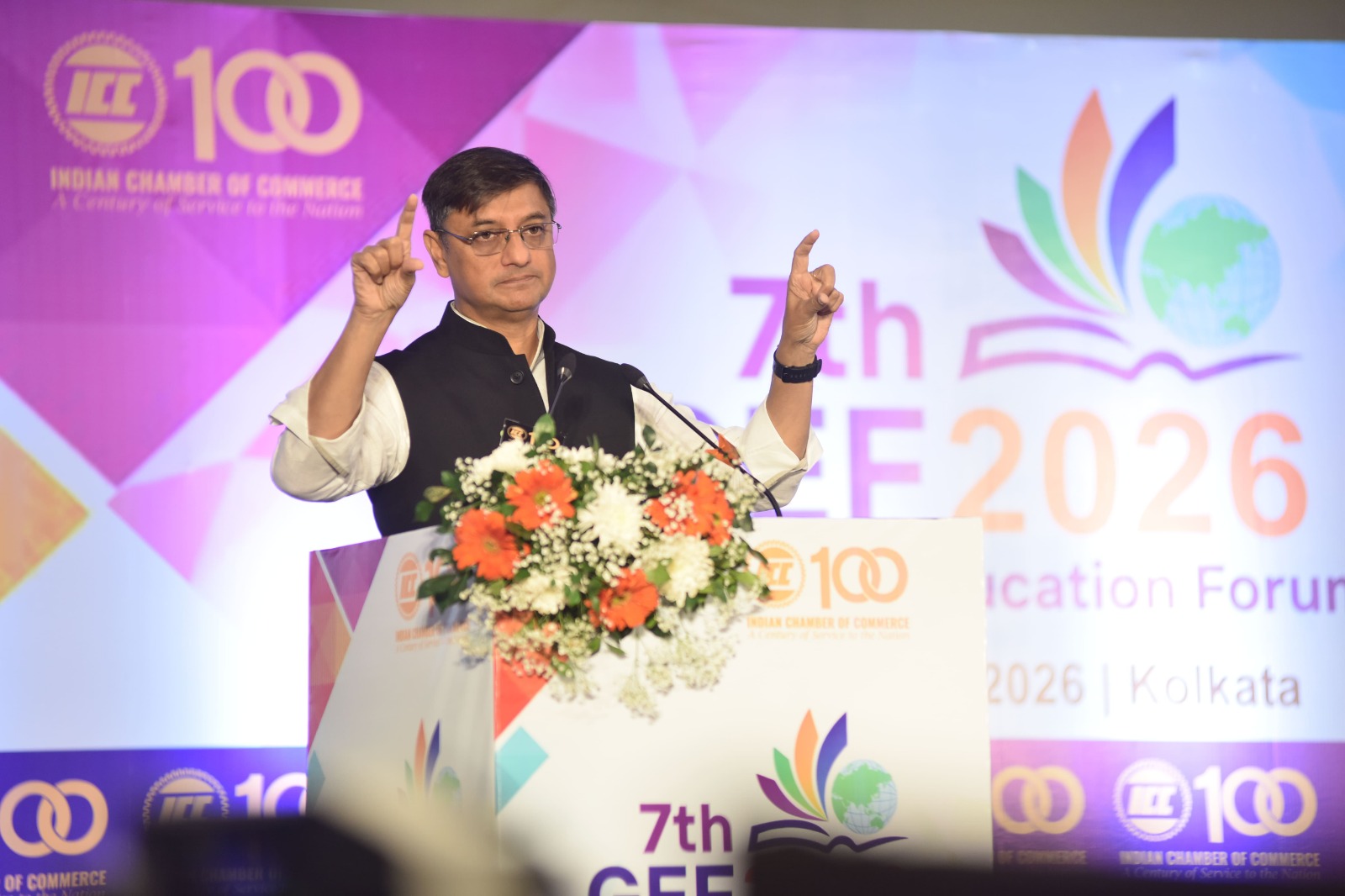
Delivering a thought-provoking address, Sanjeev Sanyal, Member of the Economic Advisory Council to the Prime Minister (EAC-PM), Government of India, stated that the rapid rise of artificial intelligence is fundamentally reshaping higher education and rendering the traditional lecture-based university model increasingly obsolete. He observed that in an AI-driven world, students can access world-class lectures from anywhere, receive instant feedback at scale, and learn at their own pace — reducing the necessity of the conventional three- or four-year residential format.
Describing this shift as a “massive opportunity” for India, he emphasised that knowledge is now effectively free and infinitely scalable, cautioning against creating artificial scarcity in access to quality education. While hands-on disciplines will continue to require physical practice, he suggested that future universities should prioritise research, flexible laboratory infrastructure and rigorous proficiency testing rather than expansive campuses. With India poised for a demographic surge, he urged policymakers to leverage technology and existing infrastructure to deliver multilingual, affordable and flexible education at scale, warning against overbuilding in a rapidly evolving global landscape.
Satyam Roychowdhury, Chairman, ICC National Expert Committee on Higher Education and Training and Chancellor of Sister Nivedita University, welcomed dignitaries and delegates, describing the moment as pivotal in India’s journey toward becoming a knowledge-driven nation. Emphasising the theme, he stated that higher education must move beyond mere transmission of knowledge to nurturing critical thinkers, ethical leaders, innovators and responsible global citizens.
He observed that universities are reimagining governance models, embracing digital technologies and redesigning academic systems to cultivate interdisciplinary approaches and lifelong learning. Highlighting India’s record representation in QS World University Rankings 2026 — with 54 institutions and over 100 universities featured overall — he stressed that inclusive growth must ensure benefits reach every region. Unlocking rural talent through innovation and action, he noted India’s employability rate at 56.35 per cent, women surpassing men in job readiness, and rising enrolment in generative AI courses. He asserted that the choices made today will determine how higher education drives India’s transformation into a knowledge-driven, innovation-led and future-ready nation, calling for decisive steps in governance reform, curriculum renewal and collaborative innovation.
Pradip Agarwal, Member, ICC National EC and CEO, Heritage Group of Institutions, remarked, “The future is not something we enter, the future is something we create,” describing the summit’s theme as both urgent and practical. He emphasised that universities must function as adaptive ecosystems, questioning whether India’s higher education system is fully prepared as the world increasingly views it as a serious global player.
Noting that over 65 per cent of India’s population is below 35 and that Gross Enrolment Ratio has crossed 30, he termed it a remarkable scale but cautioned that “scale without quality is a missed opportunity,” pointing out that only around 60 per cent of graduates are employable. Stressing autonomy with accountability, he called for robust implementation of the National Education Policy 2020 and the Viksit Bharat Shiksha Adhishtan Bill, 2025. He emphasised integrating digital literacy and ethics into curricula, strengthening research ecosystems, promoting CSR-backed R&D and building stronger MSME linkages. “The question is not whether reform is needed, but whether implementation will match ambition,” he concluded.
Industrialist Madan Mohan Mohanka, Chairman of Tega Industries, asserted that India’s journey toward Vision 2047 must be powered by entrepreneurs rather than job seekers. “If India is to become a Viksit and Atmanirbhar Bharat and the world’s number one economy by the time we complete 100 years of Independence, we must create job creators, not job seekers,” he said.
Projecting India’s population to potentially reach 1.69 billion by 2047, with annual revenues of $30–32 trillion and per capita income of $21,000, he questioned whether employment alone could generate such prosperity. “Can employment alone provide this income? The answer is no,” he remarked, advocating multidimensional human development, a strengthened manufacturing base and robust support systems for first-generation entrepreneurs.
Emphasising educational reform, he endorsed the case method of teaching to help students “learn how to think, not what to think,” and called for collateral-free loans, mentorship networks and MSME capacity building to ensure that India’s demographic dividend does not become a “demographic disaster.”
Special addresses were delivered by Julia Martin, French Language and Education Attaché, Embassy of France in India, and V. N. Rajasekharan Pillai, former Chairman of the University Grants Commission, both highlighting global collaboration, academic exchange and progressive regulatory reforms.
The session titled “Roadmap for Viksit Bharat 2047 through Future-Ready Edu-Institutions: Innovative Pedagogy & Curriculum Design” was moderated by Dhrubajyoti Chattopadhyay, Pro Chancellor, Sister Nivedita University. The distinguished panel featured Biswajoy Chatterjee, Anupam Basu, V. K. Rai, and Natasha Agarwal, who shared insights on academic excellence, innovative pedagogy and institutional transformation.
In his closing remarks, Dr. Rajeev Singh, Director General of ICC, stated that the experts had shared “extremely valuable insights, ideas and perspectives” on education and artificial intelligence, and that the system had been “rightly challenged with revolutionary thoughts.” Emphasising collective responsibility, he noted that transformation “cannot be driven by the government alone,” stressing that the focus must move beyond ideas and plans toward sustained and effective implementation.
The 7th Global Education Forum reaffirmed ICC’s commitment to fostering dialogue, strengthening partnerships and catalysing actionable reforms to build a globally competitive, inclusive and innovation-driven higher education ecosystem aligned with the aspirations of Viksit Bharat @2047.
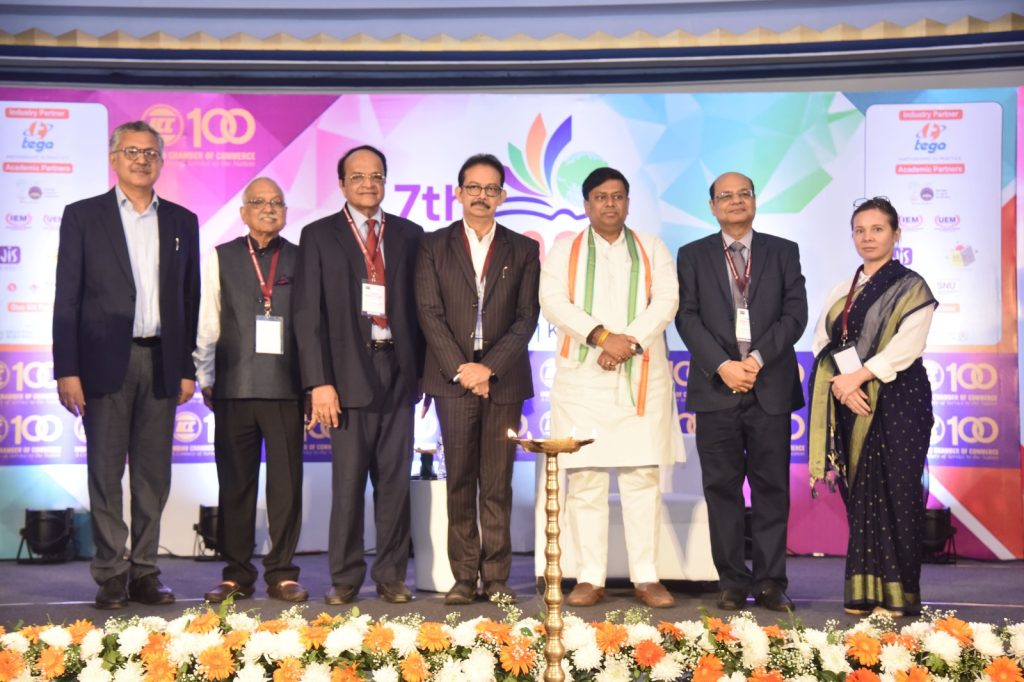
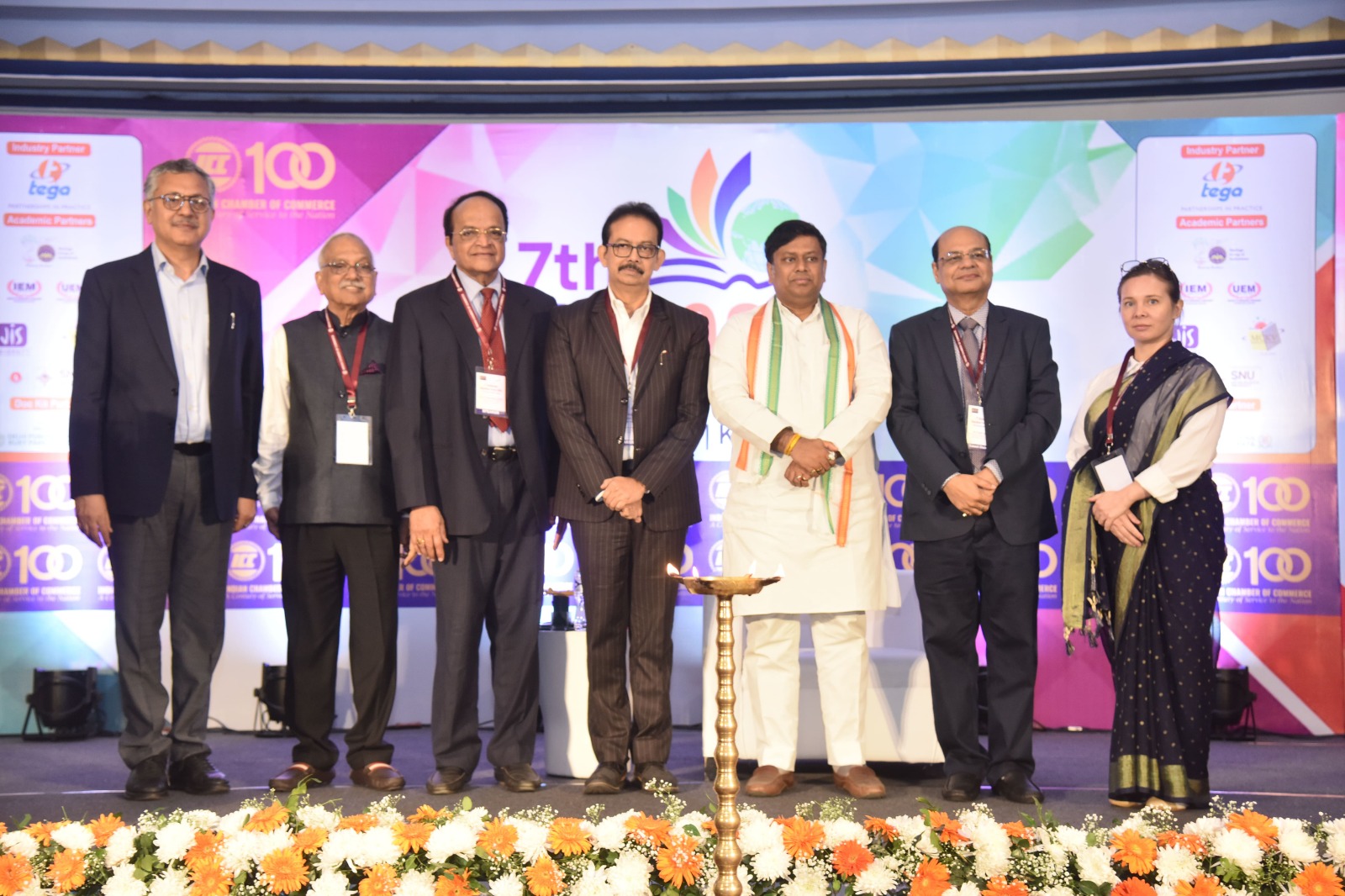
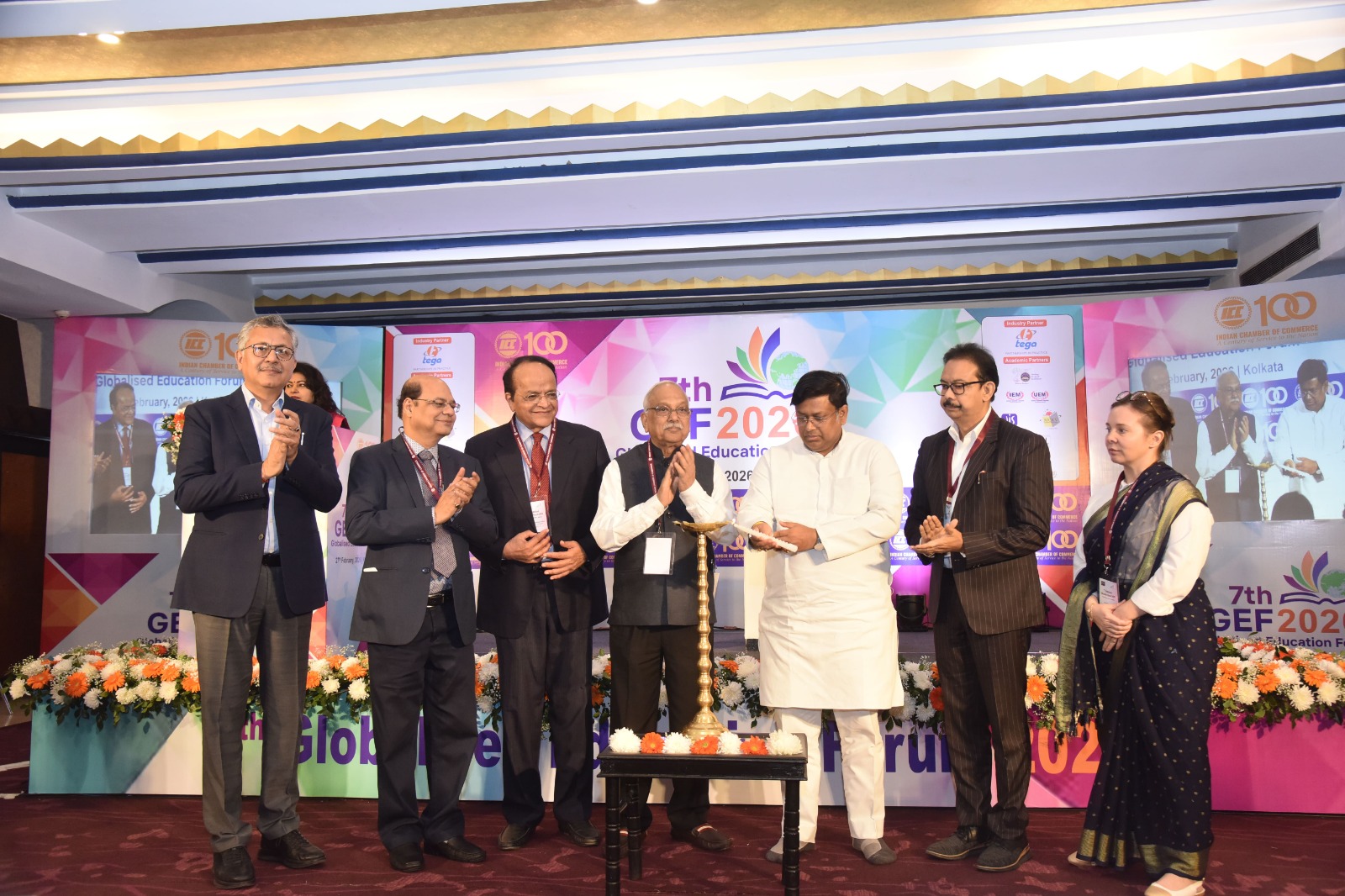
Photo Caption: Left to Right:
Picture 1: Dr. Rajeev Singh, Director General of ICC, Pradip Agarwal, Member, ICC National EC and CEO, Heritage Group of Institutions, V. N. Rajasekharan Pillai, former Chairman of the University Grants Commission, Madan Mohan Mohanka, Chairman of Tega Industries, Union Minister of State for Education & Development of North Eastern Region, Government of India, Dr. Sukanta Majumdar, Satyam Roychowdhury, Chairman, ICC National Expert Committee on Higher Education and Training and Chancellor of Sister Nivedita University, and Julia Martin, French Language and Education Attaché, Embassy of France in India
Picture 2: Sanjeev Sanyal, Member of the Economic Advisory Council to the Prime Minister (EAC-PM), Government of India,
Picture 3: Dr. Rajeev Singh, Director General of ICC, Madan Mohan Mohanka, Chairman of Tega Industries, V. N. Rajasekharan Pillai, former Chairman of the University Grants Commission, Satyam Roychowdhury, Chairman, ICC National Expert Committee on Higher Education and Training and Chancellor of Sister Nivedita University, Union Minister of State for Education & Development of North Eastern Region, Government of India, Dr. Sukanta Majumdar, Pradip Agarwal, Member, ICC National EC and CEO, Heritage Group of Institutions, and Julia Martin, French Language and Education Attaché, Embassy of France in India