

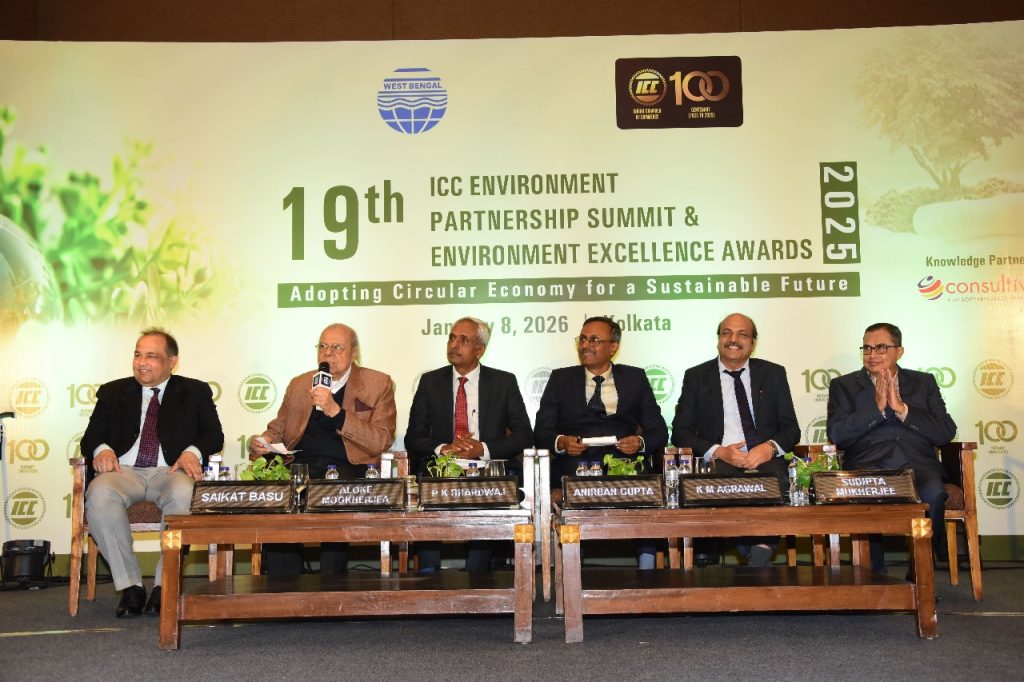
Kolkata, 8th January, 2026: The 19th ICC Environment Partnership Summit & Environment Excellence Awards, themed “Adopting Circular Economy for a Sustainable Future”, organised on Thursday, 8th January brought together policymakers, industry leaders, and experts to emphasise the urgent need to transition from a linear “take-make-dispose” model to a circular economy that ensures environmental protection, economic viability, and long-term growth.
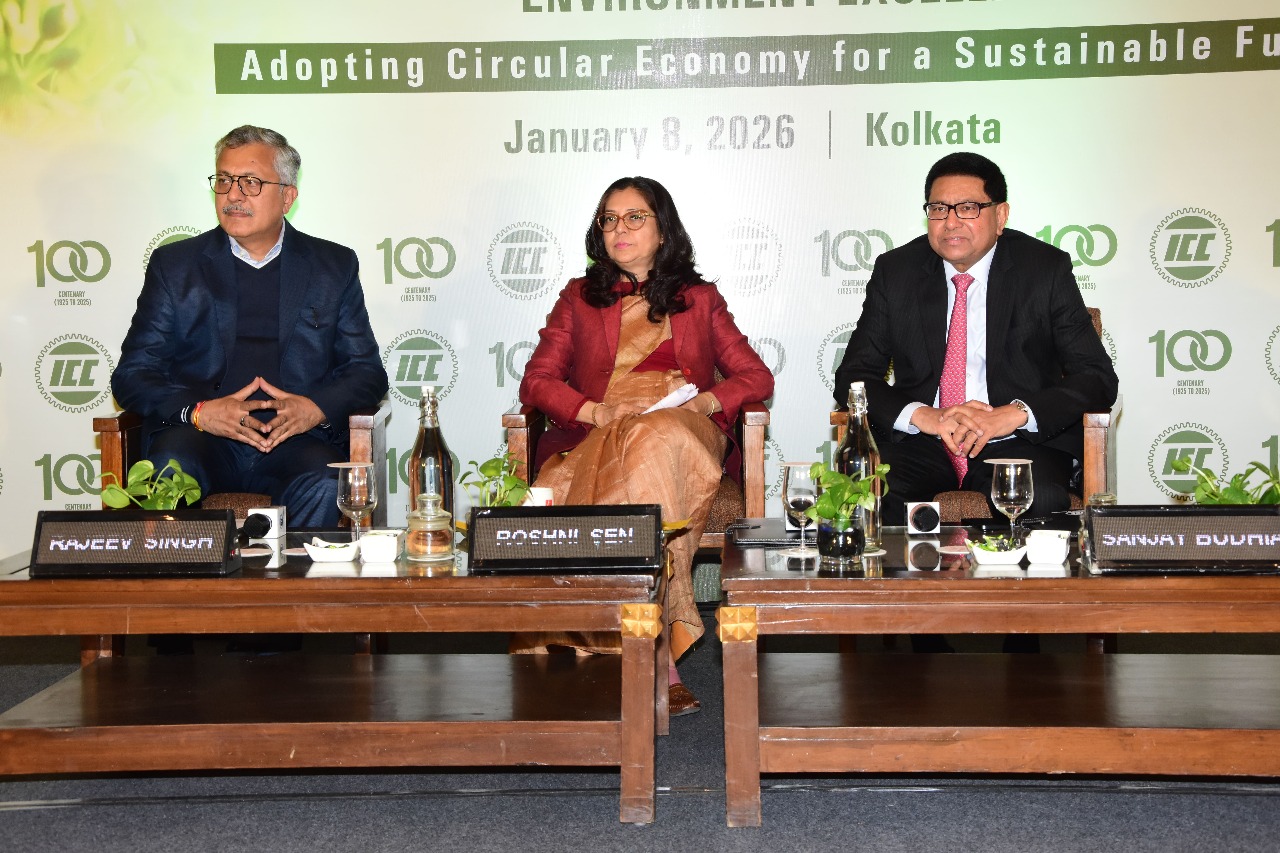
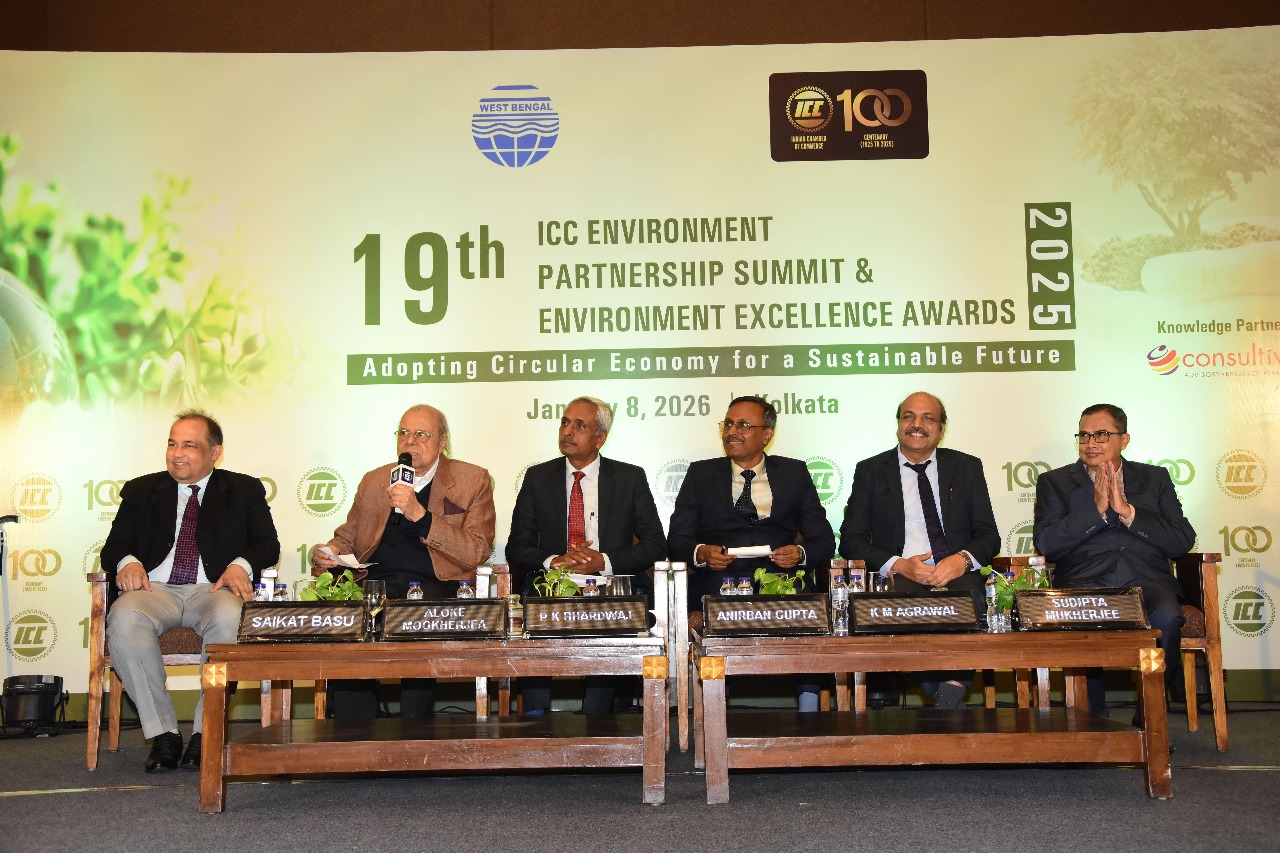
Speakers included Ms Roshni Sen, IAS, Additional Chief Secretary (Additional Charge) Department of Environment, Govt of West Bengal, Mr Sanjay Budhia, Past President – ICC & MD – Patton, Dr Rajeev Singh, Director General – ICC along with Mr. Aloke Mookherjea, Chairman – Jury Board, ICC Environment Excellence Award; Mr Saikat Basu, CEO, Consultivo; Mr PK Bhardwaj, Chief General Manager, NABARD; Prof (Dr) Anirban Gupta, Chairman, State Level Expert Appraisal Committee & Professor, IIEST, Shibpur; Prof (Dr) K M Agrawal, Director, IISWBM, Kolkata who emphasised the urgent need to transition from a linear to a circular economy to ensure environmental protection, economic viability and long-term growth.
Ms. Roshni Sen, IAS, Additional Chief Secretary (Additional Charge), Department of Environment, Government of West Bengal, described the theme as “both apt and timely to usher in the new year,” noting that the circular economy remains “one of the most neglected yet critical global challenges.” She highlighted that “rapid population growth, escalating waste generation, environmental degradation and increasing pressure on finite natural resources” make it imperative to move away from the linear model. Emphasising the four Rs—“reduction, reuse, recycling and recovery”—she said the focus must be on “extending product life cycles, minimising waste and reintegrating materials into production systems,” adding that a growing number of industrial units across the state are adopting “zero-waste operations.”
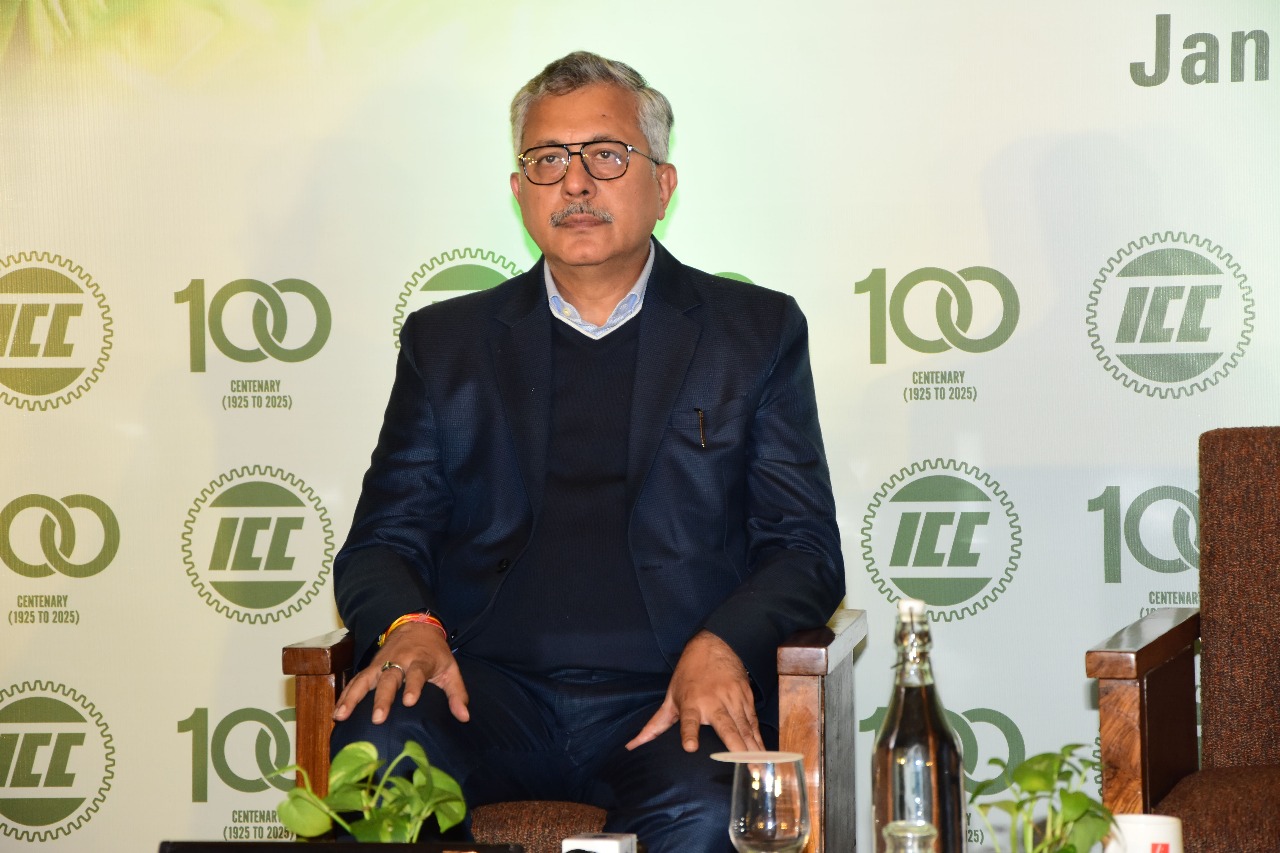
Ms. Sen outlined key initiatives: strengthening industrial symbiosis, expanding hazardous waste management, enhancing plastic waste processing capacity, and reinforcing e-waste recycling. She highlighted a 500-tonne-per-day construction and demolition waste facility at Pathuriaghata, urged developers to “maximise its utilisation,” and noted that a state-of-the-art e-waste recycling facility is nearing completion at Sonarpur Hardware Park. Action has been initiated to “develop a recycling park on government land earmarked as a State Approved Industrial Park,” while a “Registered Vehicle Scrapping Facility is already operational in Howrah district.”
On policy and governance, she said circular and green economy were identified as key themes at the National Conference of Chief Secretaries, with states required to “submit monthly progress reports.” A Special Purpose Vehicle has been formed by the MSME and Textiles Department for coordinated waste management, and recyclers and re-traders have been recognised as a distinct industrial category through the Shilpa Sathi single-window system. WEIDEL has been designated as the “state implementing and nodal agency for e-waste management.”
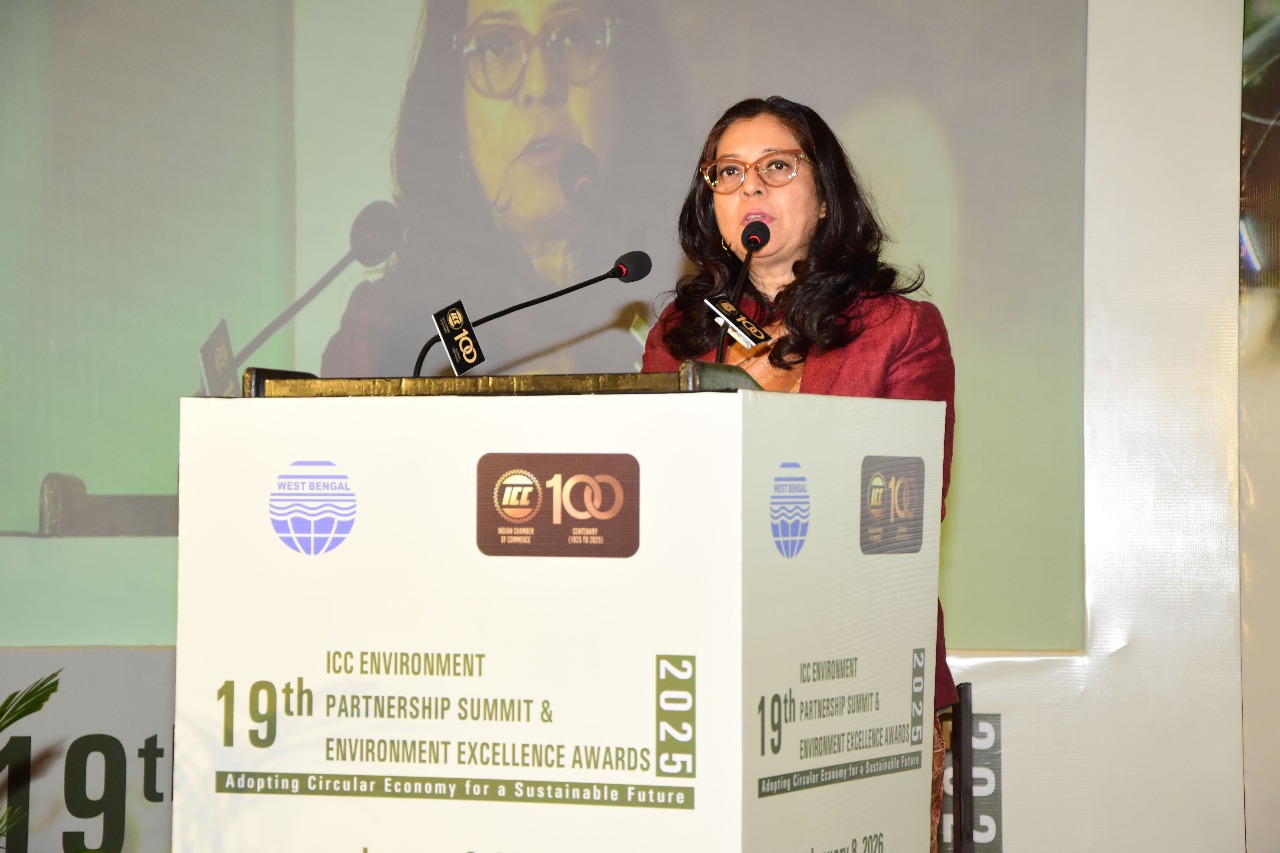
Highlighting Extended Producer Responsibility, she noted that “100 per cent registration has been achieved for producers, importers, brand owners and recyclers” under plastic, battery, and e-waste portals, with “more than 1.18 lakh kg of e-waste recycled in 2024–25” and current year figures expected to cross one lakh kg. She emphasised the role of digital monitoring through the “‘Swachch Saathi’ app,” large-scale skilling under “Swachh Bharat Mission (G) 2.0,” and “research-led innovations and rural circular economy initiatives” as critical to building “a sustainable and inclusive circular economy in West Bengal.”
Mr. Aloke Mookherjea, Chairman – Jury Board, ICC Environment Excellence Award, said, “In a circular economy, growth is measured not by what we consume, but by what we preserve. Sustainability and circularity are no longer a choice but a necessity. By designing products for their full lifecycle and prioritising repair, reuse and recycling, we can reduce resource extraction, build climate resilience, create green jobs and align future investments with responsible, circular practices.”
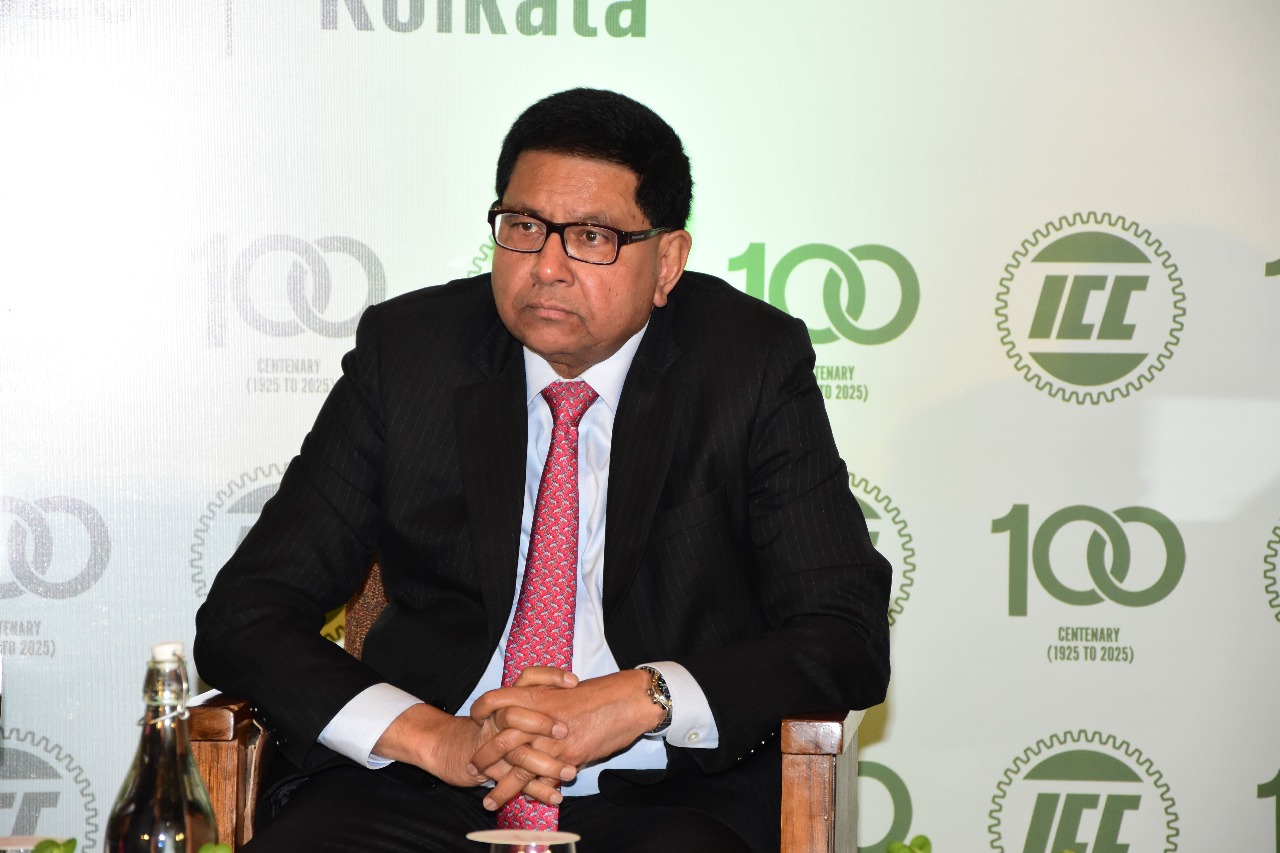
Mr. Saikat Basu, CEO, Consultivo, highlighted that the transition to a circular economy is no longer a future aspiration but a present-day strategic necessity. He said, “True circularity begins at the design stage, where products are created for repair, reuse and disassembly, ensuring a cradle-to-cradle lifecycle.” Globally, only 6–8% of materials are cycled back into the economy, resulting in over 90% of value loss. He noted that circular models prevent waste creation, enhance climate resilience, strengthen supply-chain accountability, and are increasingly favoured by investors and financial institutions. He concluded, “Future business growth will be measured not by what we consume, but by what we preserve.”
Mr. PK Bharadwaj, Chief General Manager, NABARD, stressed that the transition to a circular economy is a global imperative, moving away from the linear “take-make-consume-dispose” model toward systems that conserve resources while driving economic efficiency. He noted that by 2050, a structured circular economy could generate over US$2 trillion in economic value and create nearly 10 million jobs worldwide, positioning circularity as a strategy for resource security, green industrialisation, and livelihood creation rather than merely waste management.
Mr. Bharadwaj highlighted India’s policy momentum, including a dedicated circular economy cell at NITI Aayog and the launch of the ‘Right to Repair’ portal by the Ministry of Consumer Affairs to extend product life cycles. Circular practices are being expanded into agriculture via crop residue recycling, circular water management, and soil regeneration. NABARD’s Climate Strategy 2030 provides a roadmap to scale climate-resilient agriculture, expand green lending, and embed environmental risk management, including mangrove restoration in the Sundarbans and studies on green climate investments in West Bengal. He emphasised that coordinated efforts across academic, research, and financial institutions are essential for a climate-resilient nation.
Prof. (Dr) K M Agarwal, Director, IISWBM, said, “The circular economy is no longer optional; it is an industrial necessity.” He noted that “less than 10 per cent of resources are recycled annually, while 90 per cent are lost to the environment,” calling the current model unsustainable. A shift to a “zero-waste approach” offers “both regulatory compliance and significant cost reduction” for industries. Policy reforms include reduced land use norms for thermal power plants—from 4,000 acres to 600 acres for a 1,000 MW plant—and mandatory 100% fly ash utilisation within four years.
Mr. Agarwal highlighted industrial symbiosis: “Using 30 per cent fly ash in cement leads to a 30 per cent saving on clinker,” costing £100–£120 per tonne. “Slag-based cement can use up to 80 per cent industrial waste,” making circularity commercially viable. On waste management, he noted that “advanced technologies have cut sludge generation from 20,000 tonnes to under 4,000 tonnes,” with the remainder converted into alternative fuel. He stressed that although initial investments may be higher, “the long-term future of industry depends on circularity,” which “creates jobs, new business opportunities and long-term resource security.”
Prof. (Dr) Anirban Gupta, Chairman, State Level Expert Appraisal Committee & Professor, IIEST Shibpur, addressed modern consumerism challenges: “The transition from a linear to a circular economy requires a fundamental shift away from the false premises of infinite resources. Hyper-consumerism, driven by planned obsolescence, is fundamentally incompatible with sustainability. True circularity requires a ‘Design for Excellence’ approach, with products engineered for environment, disassembly, and serviceability, and business models pivoting towards ‘Product as a Service,’ incentivising durability over disposability.”
He further noted, “The internalisation of environmental and social costs is now a critical economic factor. Material extraction for the green transition, such as lithium and cobalt, carries immense water and human health costs, which must be reflected in pricing. With regulations like Extended Producer Responsibility, carbon taxes, and zero-liquid discharge mandates intensifying, circularity is increasingly essential for market competitiveness. Ultimately, achieving this goal requires ethical engineering and a collective shift in citizen responsibility to conserve resources for future generations.”
Mr. Sanjay Budhia, Past President – ICC & MD, Patton, emphasised that the summit underscores the critical importance of the environment. “In a world of finite resources, embracing circular economy principles is no longer optional; it is essential,” he said. He noted that “fully adopting these principles could yield annual benefits of ₹40 lakh crores (US$644 billion) by 2050,” and called for harmonised policies, effective incentives, and enforcement mechanisms promoting recycled materials. Budhia highlighted West Bengal initiatives under Chief Minister Smt. Mamata Banerjee, including waste processing plants across 128 municipalities by 2026 to convert organic and plastic waste into compost, biogas, and reusable materials, and transforming Dhapa landfill in Kolkata into a waste-to-energy hub. He added that the Environment Excellence Awards recognise organisations demonstrating exceptional commitment to sustainability, inspiring transformative change and leadership.
Dr. Rajeev Singh, Director General, ICC, said, “By recognising champions in sustainability, we inspire others and spread the spirit of change.” He underscored the pivotal role of industry in addressing climate challenges and highlighted ICC’s efforts to showcase best practices for wider adoption. He thanked Ms. Sen for sharing insights on Bengal’s initiatives, noting her “fresh and focused approach,” and complimented award winners and their teams for their dedication to sustainable practices.
Other distinguished speakers included industry leaders across banking, academia, and consulting, all advocating a rapid, coordinated transition to a circular economy for environmental protection, economic growth, and long-term sustainability.





2 thoughts on “ICC hosts 19th Environment Partnership Summit and Excellence Award: Highlights Circular Economy as the Need of the Hour”