
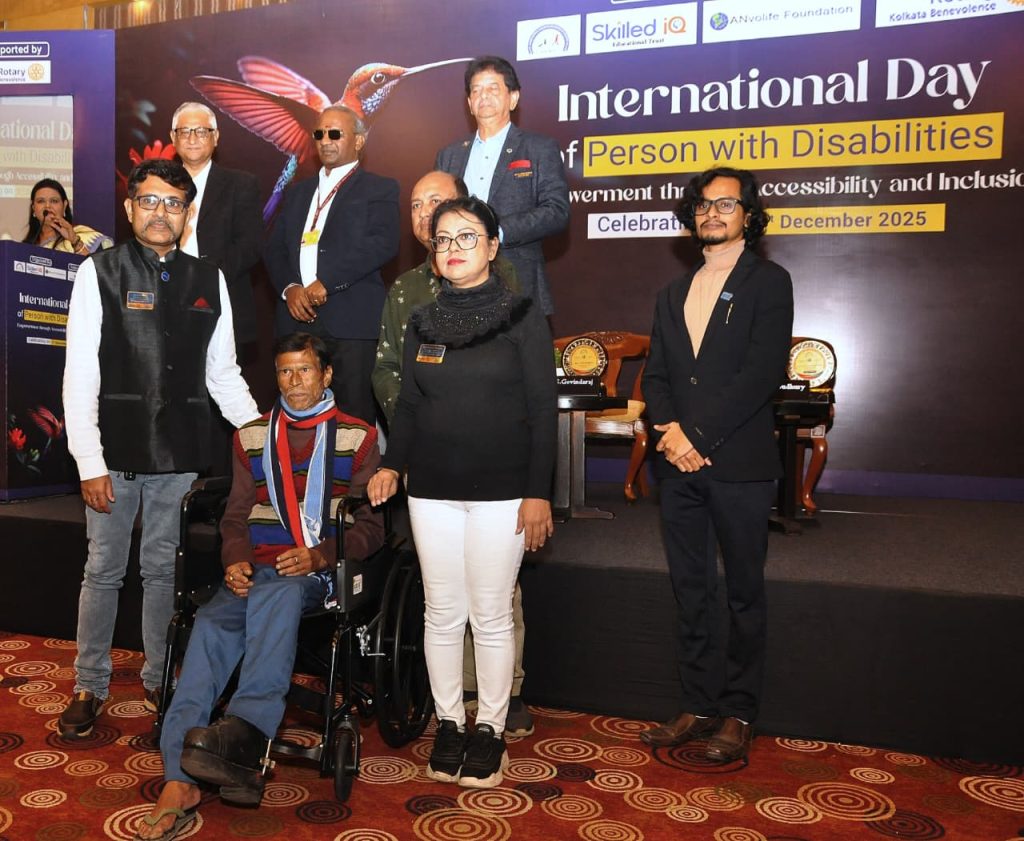
Kolkata, 1 December 2025: Nabajatak Child Development Centre, in association with ANVolife Foundation, SkilledIQ Educational Trust, and the Rotary Club of Kolkata Benevolence, successfully organised the International Day for Persons with Disabilities – 2025. The event brought together experts, parents, students, and community members for an engaging evening dedicated to advancing inclusion, accessibility, and empowerment.
The programme was held in the esteemed presence of Dr. S. Govindaraj, Commissioner, PWD, Ministry of Social Justice & Empowerment, Government of India, and Dr. Ramendu Homchoudhury, District Governor, RID 3291. The evening opened with introductory remarks and a formal welcome of dignitaries.
Dr. S. Govindaraj, Commissioner, PWD, Ministry of Social Justice & Empowerment, Government of India, addressed the occasion, stating, “The International Day of Persons with Disabilities (IDPD) has its origins in the tragic events of 1981, and therefore it is a day that should be observed rather than celebrated. Its purpose is to remind governments and organizations of their responsibility to introduce impactful schemes and uphold their social duty by advancing education, employment, and dignity for persons with disabilities. Over time, the terminology has shifted from ‘handicapped’ to ‘physically challenged,’ and now to ‘Divyangjan,’ reflecting a move from a welfare model to a social model inspired by the UNCRPD and the RPD Act 2016. Today, the focus must be on inclusivity, accessibility, and fostering empathy that leads to empowerment.”
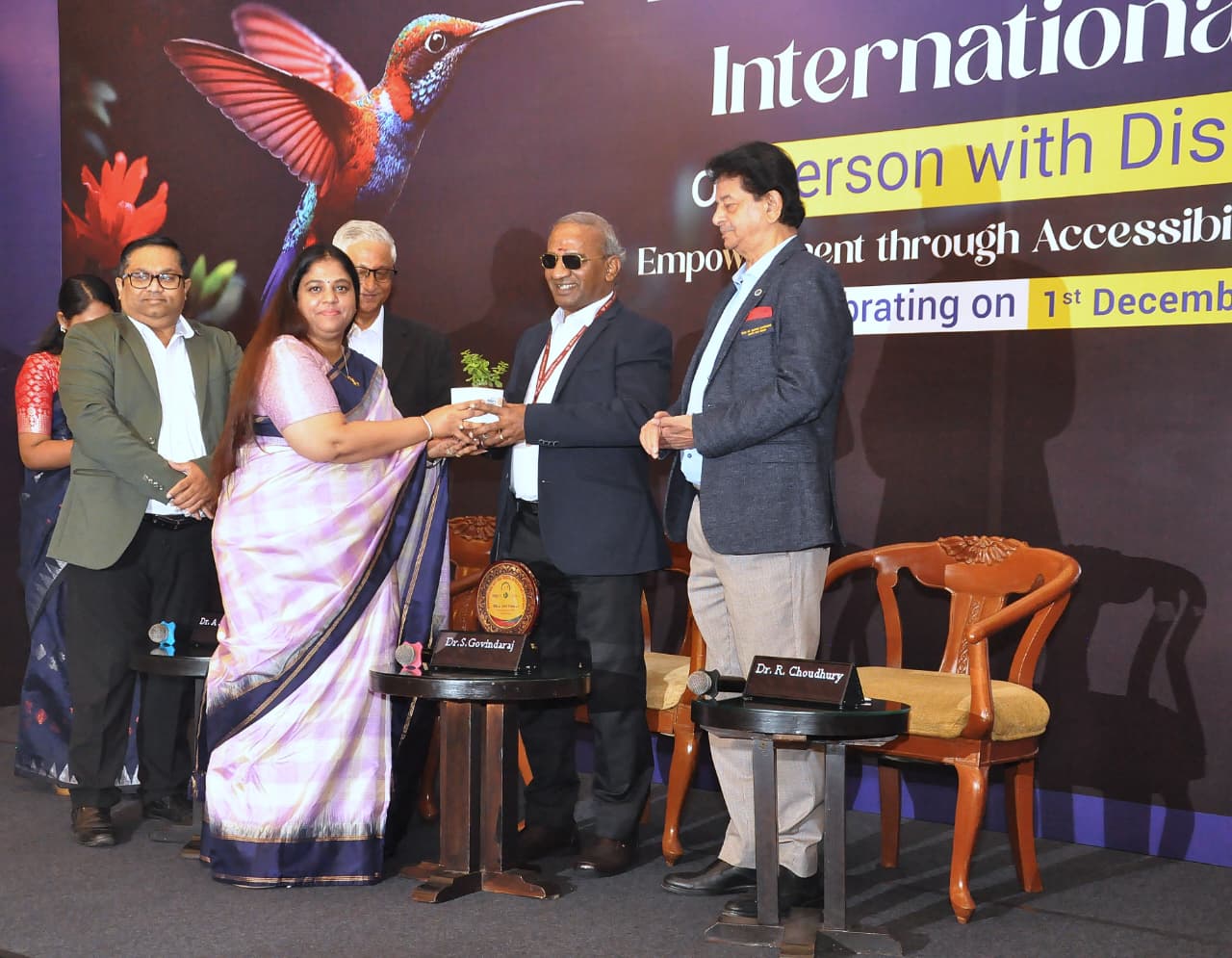
Dr. Ramendu Homchoudhury, District Governor, RID 3291, addressed the gathering, stating that World AIDS Day is a solemn day of remembrance. He highlighted how discussions often move from post-birth disabilities to a far more serious pre-birth, permanent condition—Thalassemia—a century-old genetic disorder sustained by lack of awareness and silence. He explained that when two carriers marry, their child is at significant risk, and those affected require lifelong blood transfusions. This results in a nationwide demand of over two million units of blood annually, straining India’s blood banks and costing thousands of crores, along with immense suffering for the children. He emphasized that the purpose of the event is to raise awareness and break the silence surrounding this genetic disorder.
A wheelchair donation ceremony added significance to the occasion, highlighting the collective effort to support mobility and independence for children with disabilities.
The event featured two major panel discussions. The first session focused on “Inclusive Healthcare: A Multidisciplinary Approach to Accessibility,” where specialists from fetal medicine, neonatology, developmental physiotherapy, and optometry discussed the growing need for integrated systems of care. The second panel explored “From Awareness to Action: Education, Policy, and Community Empowerment,” offering perspectives from the fields of medical genetics, dentistry, mental wellness, and organisational leadership.
These discussions emphasised the importance of collaborative, long-term strategies for strengthening disability inclusion.
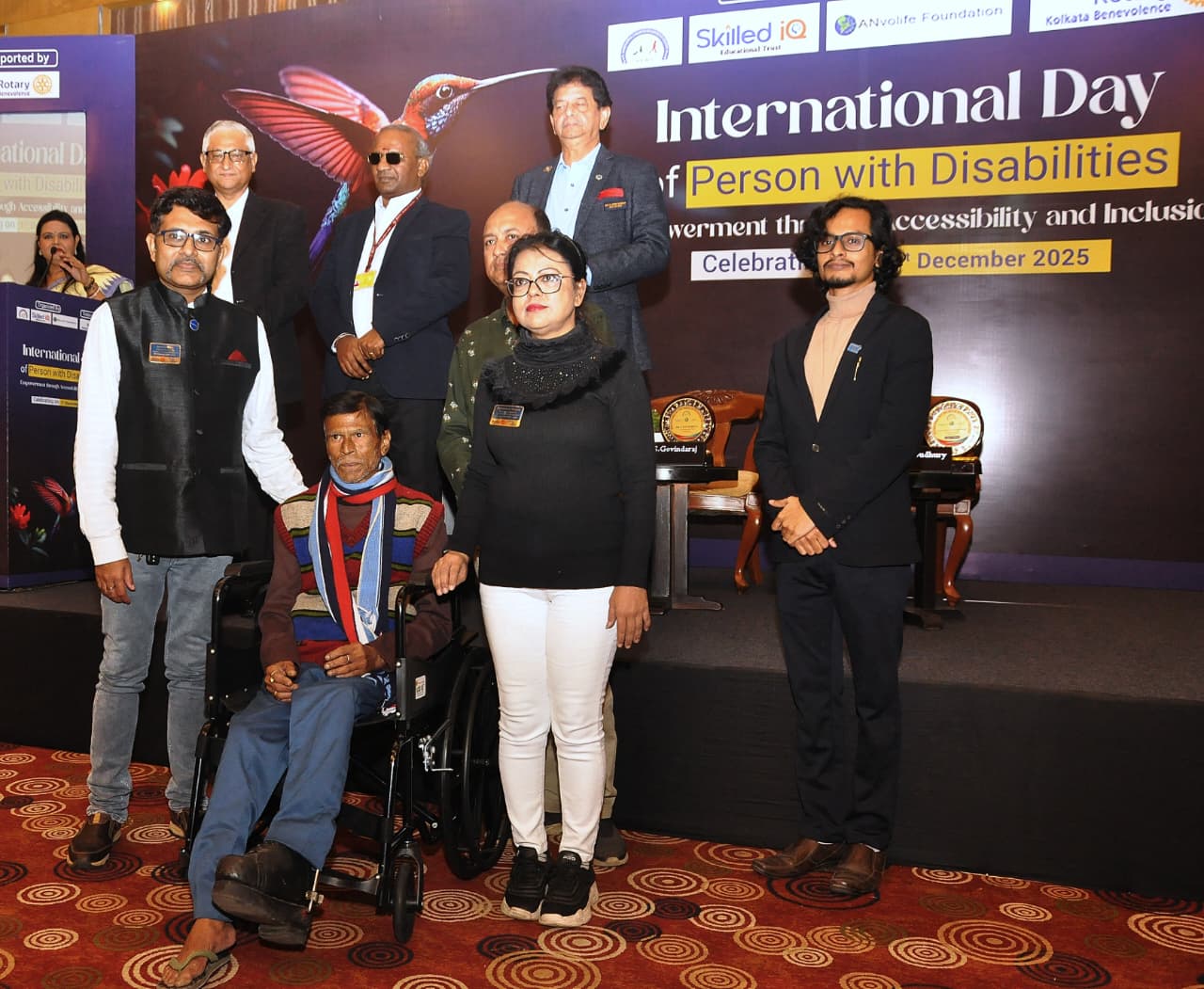
Interspersed between the discussions were spotlight presentations that showcased the Kolkata Development Model, highlighted collaborative work between Nabajatak, SkilledIQ, and Asha CDC, and shared an inspiring journey of overcoming barriers through martial arts. These presentations broadened the lens of inclusion by demonstrating real-life progress, community initiatives, and individual achievements.
The programme concluded with an interactive session involving parents, followed by a vote of thanks, group photographs, and networking. The event collectively reinforced the commitment of all participating organisations and stakeholders to work towards an accessible, informed, and inclusive future for persons with disabilities.



2 thoughts on “Creating an Inclusive Tomorrow: Kolkata Observes International Day for Persons with Disabilities 2025”